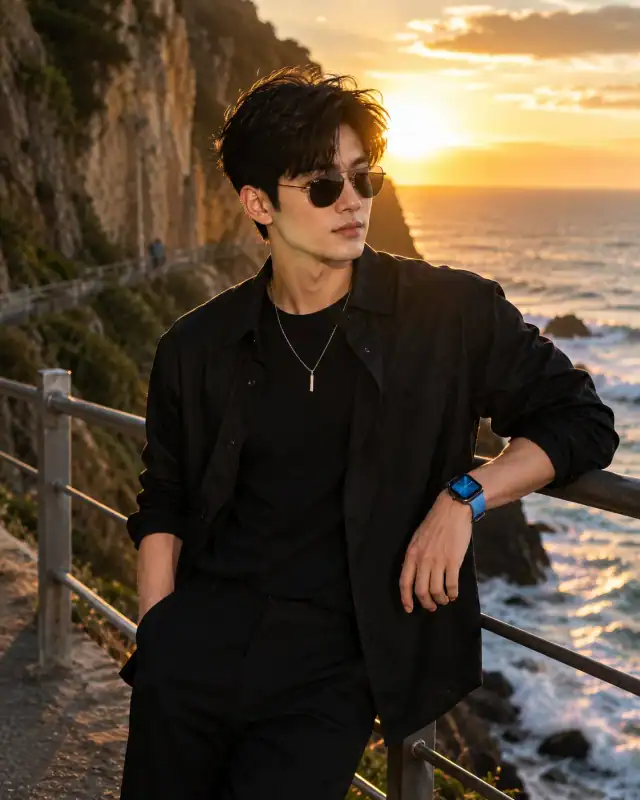
Create a highly realistic, premium editorial lifestyle portrait of ME using my uploaded personal photo as the PRIMARY IDENTITY REFERENCE. IDENTITY — MOST IMPORTANT Preserve my exact facial identity from my uploaded photo. Do NOT replace my face with another person's face and do NOT create a different person. Keep my natural and recognizable facial characteristics exactly consistent with the identity reference, including my face shape, forehead, eyebrows, eyes, eyelids, nose, lips, cheekbones, jawline, chin, ears, facial proportions, skin tone, hairline, hairstyle characteristics, beard/stubble pattern, age, and overall masculine appearance. The final image must clearly look like me, not like the model in the reference image. Do not excessively beautify, reshape, slim, enlarge, or alter my facial features. Preserve realistic skin texture, natural pores, subtle fine lines, authentic facial hair/stubble, natural under-eye texture, and believable skin imperfections. Avoid plastic-looking or overly airbrushed skin. POSE & COMPOSITION Create a sophisticated, relaxed three-quarter portrait similar to a premium lifestyle fashion photograph. Position me seated comfortably inside an elegant modern café. My upper body should be naturally angled slightly away from the camera while my face is turned toward the left side of the frame. My head should be held naturally with a subtle thoughtful expression. Eyes should look slightly toward the left/outside the frame, as if casually observing something beyond the café window. Expression should be: calm intelligent confident relaxed sophisticated naturally masculine subtle and understated Do not create an exaggerated smile. Keep the expression natural and composed. Frame the portrait from approximately the mid-chest/upper torso upward, with the face as the main focal point. Maintain realistic body proportions and natural shoulder positioning. HAIR Keep my own recognizable hairstyle and hair characteristics from the identity reference, while styling it naturally in the aesthetic of the reference image. Hair should appear: thick dark brown to deep brown/black naturally wavy softly voluminous slightly tousled naturally swept backward and slightly to the side individual hair strands visible realistic flyaway hairs subtle natural texture Do not make the hair artificially perfect or excessively glossy. EYEGLASSES Add sophisticated premium rectangular eyeglasses similar to the reference image. The glasses should have: thin black/dark charcoal frame subtle metallic detailing transparent realistic lenses natural reflections accurate frame geometry realistic nose bridge placement realistic temple arms positioned correctly around the ears The glasses must fit naturally on my face without changing my facial proportions. Avoid distorted lenses, warped frames, duplicate frames, asymmetrical glasses, or unnatural reflections. OUTFIT Dress me in a sophisticated minimalist premium casual outfit inspired by the reference: A deep navy / very dark blue lightweight premium jacket with a clean structured collar and realistic metal zipper. Under the jacket, wear a plain premium white crew-neck T-shirt. The clothing should look: perfectly fitted but natural elegant minimal masculine contemporary premium realistic Show authentic fabric texture, subtle wrinkles, natural folds, realistic stitching, zipper details, and believable shadows. Do not add logos, text, graphics, patterns, or unnecessary accessories. ENVIRONMENT Place me inside a sophisticated modern café or upscale coffee shop near a large floor-to-ceiling window. The background should resemble a stylish urban café with: large dark window frames soft daylight entering through the window blurred outdoor city environment subtle café furniture dark interior elements warm decorative lighting softly glowing round pendant lights subtle reflections on glass elegant dark wood/black architectural details The background must remain secondary to the subject. Create realistic environmental depth without making the background completely artificial. LIGHTING Use cinematic natural window lighting. Soft daylight should illuminate my face primarily from the left/front side, creating gentle natural highlights across the forehead, cheekbones, nose, and jawline. Use subtle warm ambient café lighting in the background to create a beautiful contrast between: cool/neutral daylight on the subject warm golden tones in the café interior Lighting should be soft, diffused, sophisticated, and realistic. Preserve natural facial shadows. Do not flatten the face with excessive lighting. Create subtle catchlights in the eyes and realistic reflections in the eyeglass lenses. PHOTOGRAPHY STYLE Premium high-end lifestyle editorial photography. Photograph the scene as if captured with a professional full-frame mirrorless camera and a high-quality portrait lens around 50mm–85mm. Use: realistic optical depth shallow depth of field natural bokeh crisp facial details soft background separation realistic skin rendering cinematic tonal range subtle professional color grading natural contrast high dynamic range realistic exposure The face and eyes must remain extremely sharp while the café background gradually falls into soft cinematic blur. Avoid an artificial AI-generated appearance. COLOR & MOOD Overall mood should be: quiet luxury + sophisticated + intellectual + modern + relaxed + premium editorial Use a refined color palette consisting of: deep navy charcoal black natural skin tones clean white warm amber/golden café highlights muted urban background tones Keep skin tones natural and believable. REALISM The final image must look like a genuine professional photograph captured in a real café. Include subtle realistic details such as: natural skin pores individual facial hair realistic hair strands tiny fabric textures authentic jacket stitching realistic zipper reflections natural eyeglass reflections believable window reflections realistic shadows natural depth of field subtle lens characteristics No CGI appearance, no artificial skin, no excessive HDR, no over-sharpening. CAMERA & FRAMING Use a vertical 4:5 aspect ratiocomposition. The subject should occupy most of the frame while leaving enough breathing room around the head and shoulders. Keep the eyes approximately in the upper-middle portion of the composition. Maintain a natural editorial crop with the shoulders and upper torso visible. The final image should feel like a professionally photographed fashion/lifestyle portrait rather than a studio headshot. FINAL OUTPUT Generate an ultra-realistic, high-resolution, premium editorial portrait of me, maintaining my exact identity from the uploaded personal photo while recreating the pose, outfit aesthetic, café environment, lighting, composition, camera perspective, glasses style, color mood, and photographic atmosphere of the reference. No text, no captions, no watermark, no logo, no graphics.



 Ultra-Realistic Men’s Luxury Fashion Portrait PromptUltra-Realistic Men’s Luxury Fashion Portrait Prompt