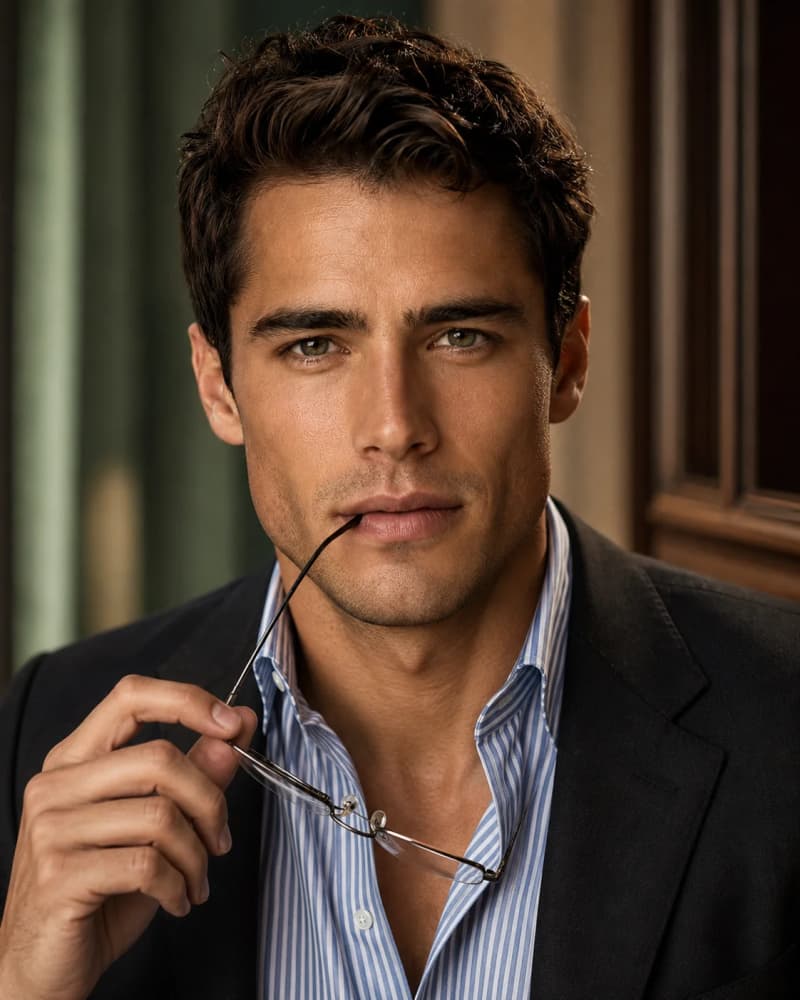
Create a highly realistic premium editorial fashion portrait in a vertical 4:5 aspect ratio. Use the uploaded personal photo as the PRIMARY IDENTITY REFERENCE. Preserve the person’s exact identity and facial characteristics. Do not replace or redesign the face. Keep the exact facial structure, face shape, forehead, cheekbones, jawline, chin, nose shape, lips, eyes, eyebrows, ears, hairline, beard/stubble pattern, natural skin tone, age, and overall recognizable appearance consistent with the uploaded identity reference. COMPOSITION: A sophisticated close-up portrait framed vertically from approximately the upper chest to the top of the head. The subject is positioned slightly toward the center/right of the frame. The camera is at approximately eye level with a subtle intimate portrait perspective. The face occupies most of the frame, creating a strong, confident and elegant visual presence. POSE & EXPRESSION: The subject has a relaxed, confident and intelligent expression with a calm, slightly serious masculine mood. Head naturally angled very slightly toward the camera, eyes looking directly into the lens with a subtle thoughtful intensity. Lips are naturally relaxed and slightly parted. Facial expression should feel effortless rather than posed. HAIR: Thick, naturally voluminous dark brown to deep black hair, styled backward and slightly to the side. Preserve realistic individual hair strands, natural texture, subtle separation between strands and believable volume. Avoid overly perfect or artificial hair. FACE & SKIN: Extremely realistic masculine facial features with authentic skin texture. Preserve visible pores, subtle fine lines, natural tonal variations, tiny imperfections, realistic beard/stubble texture and natural under-eye detail. Do not make the skin excessively smooth, glossy, plastic or airbrushed. Maintain realistic facial proportions and natural asymmetry. EYEGLASSES: The subject is holding a pair of thin, elegant rectangular metal-frame eyeglasses. One temple/arm of the glasses is naturally positioned between or near the lips while the subject holds the other part of the glasses casually with one hand. The glasses should look physically believable, with realistic reflections on the lenses and accurate metal-frame geometry. HAND: One hand enters naturally from the lower-left portion of the frame, gently holding the eyeglasses. Fingers must be anatomically correct, naturally proportioned and realistically positioned. Preserve realistic knuckles, joints, fingernails, skin texture and subtle veins. No extra fingers, fused fingers or distorted hands. OUTFIT: Premium sophisticated formal-casual menswear. A dark charcoal or black tailored blazer/jacket over a crisp light blue and white vertically striped button-up dress shirt. The shirt is slightly open at the upper chest with the collar naturally relaxed, creating an elegant contemporary masculine editorial appearance. Fabric should have realistic fine texture, natural folds, stitching and subtle dimensional detail. LIGHTING: Soft natural window light coming primarily from the front-left side of the subject. Gentle highlights across the forehead, cheekbones, nose and lips, with subtle natural shadows defining the jawline and facial structure. Cinematic but believable lighting. Soft falloff, moderate contrast, realistic skin luminosity, no harsh studio flash. BACKGROUND: A softly blurred sophisticated indoor environment, resembling an upscale office, hotel room or elegant interior. Warm neutral wall tones with subtle architectural details in the background. Include a muted green/teal blurred area on one side and a warm dark wooden architectural element on the other side. Strong shallow depth of field keeps the background heavily blurred while the face remains extremely sharp. CAMERA & PHOTOGRAPHY: Professional high-end fashion/editorial photography, full-frame camera look, approximately 85mm portrait lens, shallow depth of field around f/1.8–f/2.2. Extremely sharp focus on the eyes and facial features. Natural optical depth, realistic lens rendering, subtle background compression, fine photographic detail. COLOR & MOOD: Sophisticated neutral color palette with warm natural skin tones, deep blacks, muted blue shirt tones, subtle green background tones and warm brown wood. Premium luxury editorial mood, understated masculine elegance, confident, intelligent and cinematic. REALISM: Photorealistic, lifelike human anatomy, realistic skin pores, realistic hair strands, realistic fabric, physically accurate eyeglasses, natural reflections, authentic photographic depth, subtle imperfections, professional portrait photography. The final result should look like a real photograph captured with a high-end professional camera, not AI-generated artwork.




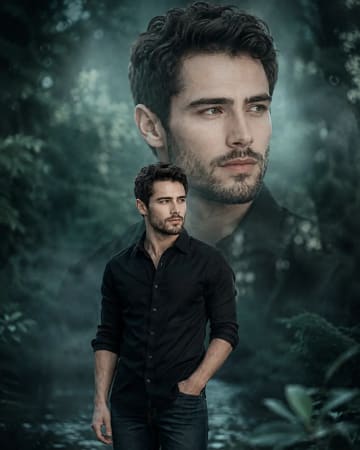 Cinematic Teal Double Exposure Man Portrait PromptCinematic Teal Double Exposure Man Portrait Prompt