Core technique
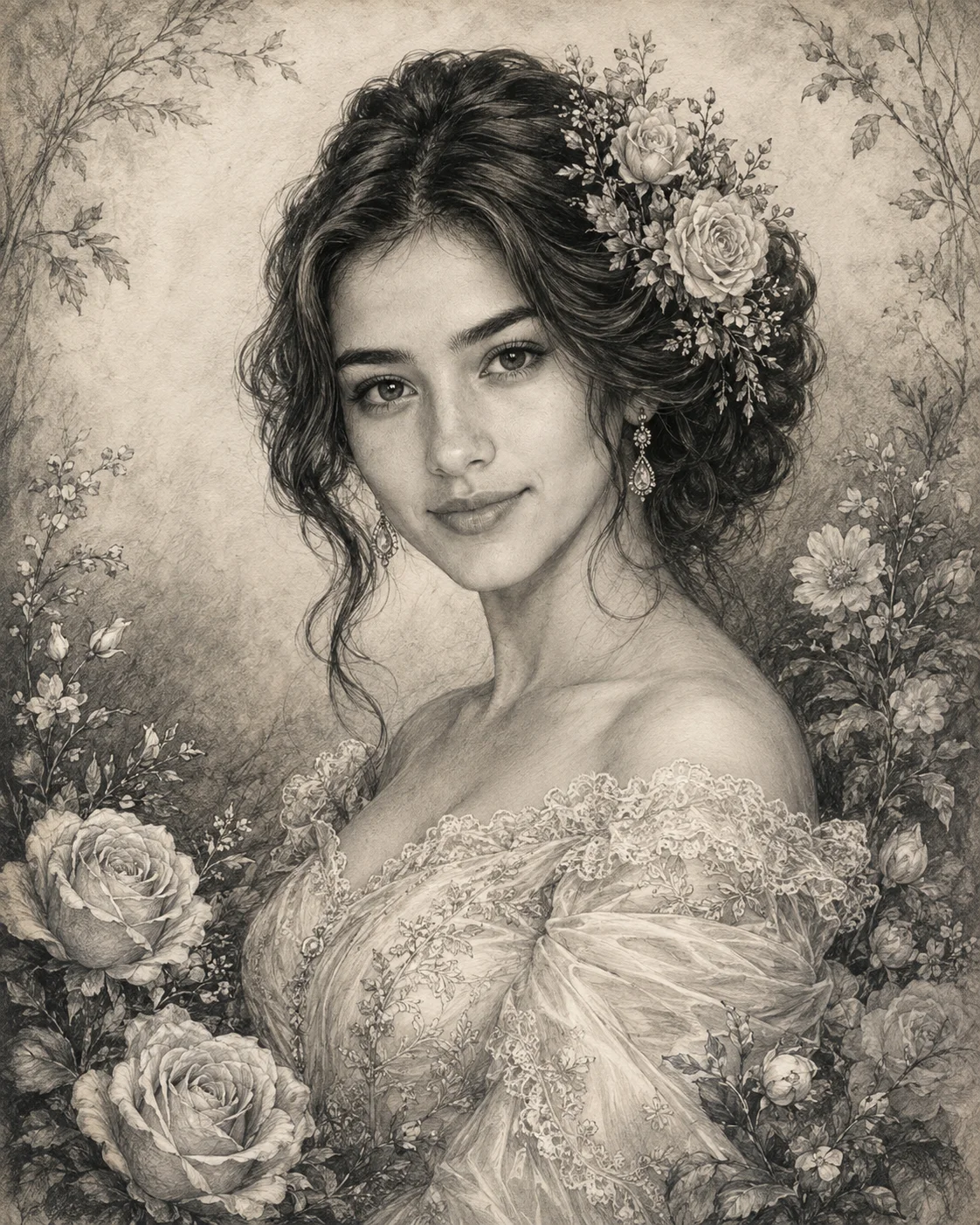
The prompt uses a layered identity-and-style workflow: the personal photograph controls facial identity and proportions, while the requested vintage aesthetic controls the visual transformation. Composition is built around a three-quarter head angle with the face as the focal point, balanced by the hairstyle, floral arrangement, gown, and surrounding botanical elements. Texture instructions then reinforce the illustration treatment through graphite strokes, charcoal shading, hatching, smudging, paper grain, and imperfect hand-drawn edges.
Recommended base models
GPT-Image-1 — strong fit for following the many identity, styling, composition, and texture constraints together. Flux — useful for detailed portrait rendering and the combination of hair, flowers, clothing, and facial structure, though identity consistency can vary. Midjourney — strong for the antique editorial aesthetic and floral styling, but the strict “this must look like ME” requirement may need more identity-reference control. SDXL-based workflows — suitable when using dedicated identity/reference conditioning, especially for maintaining facial structure while applying the illustration style.
Suggested negative prompt
different person, changed identity, generic model face, altered facial proportions, distorted eyes, asymmetrical eyes, malformed nose, distorted lips, deformed ears, plastic skin, waxy skin, excessive smoothing, excessive beauty retouching, modern digital cartoon, anime, 3D render, CGI, flat vector illustration, photorealistic modern studio background, colorful flowers, bright colors, neon colors, modern clothing, oversized jewelry, pasted-on flowers, messy floral arrangement, distorted hands, extra fingers, malformed anatomy, duplicated accessories, harsh digital contrast, over sharpening, excessive blur, low-detail face, flat shading, weak pencil texture, missing paper grain, text, typography, watermark, logo, signature, frame, border