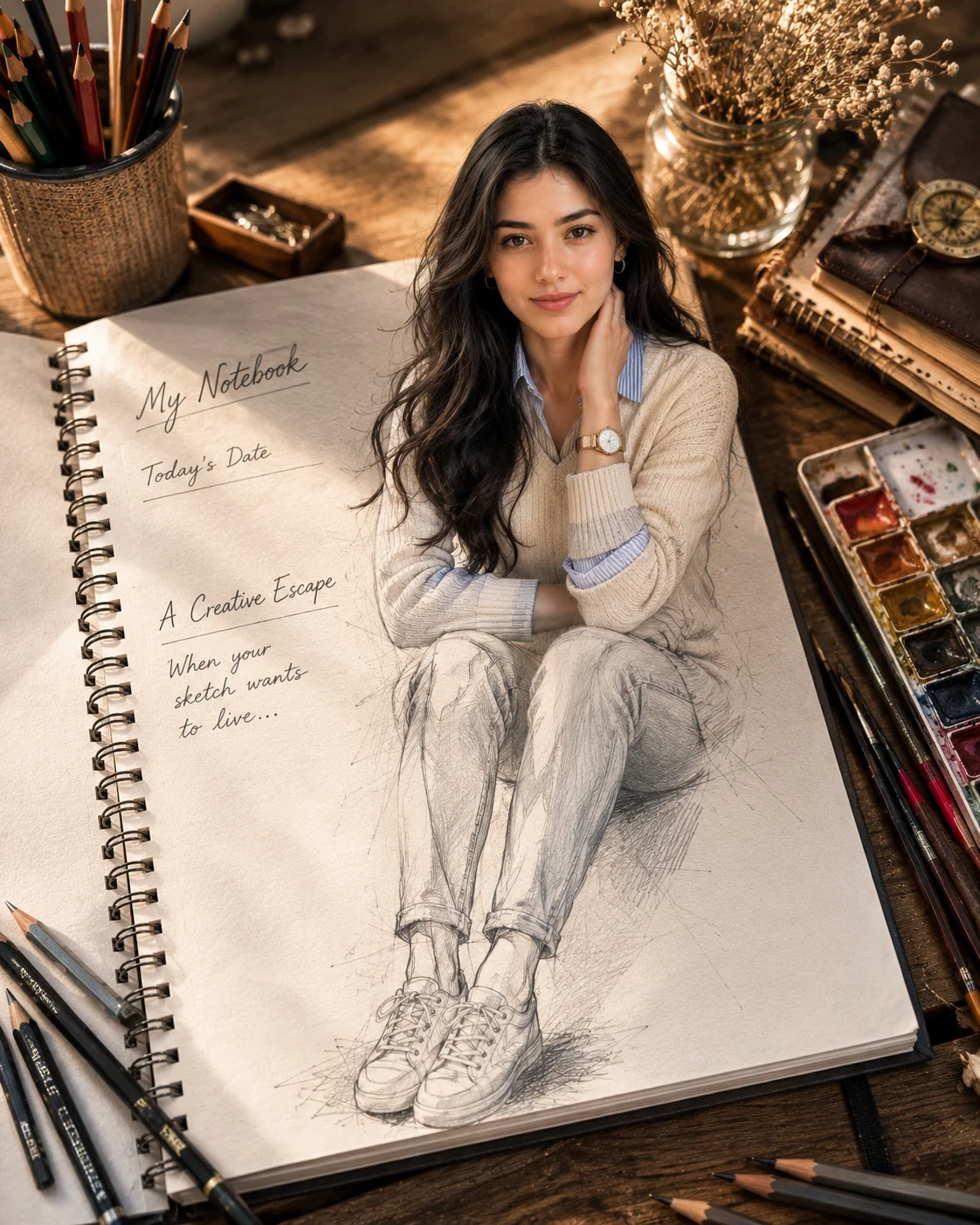
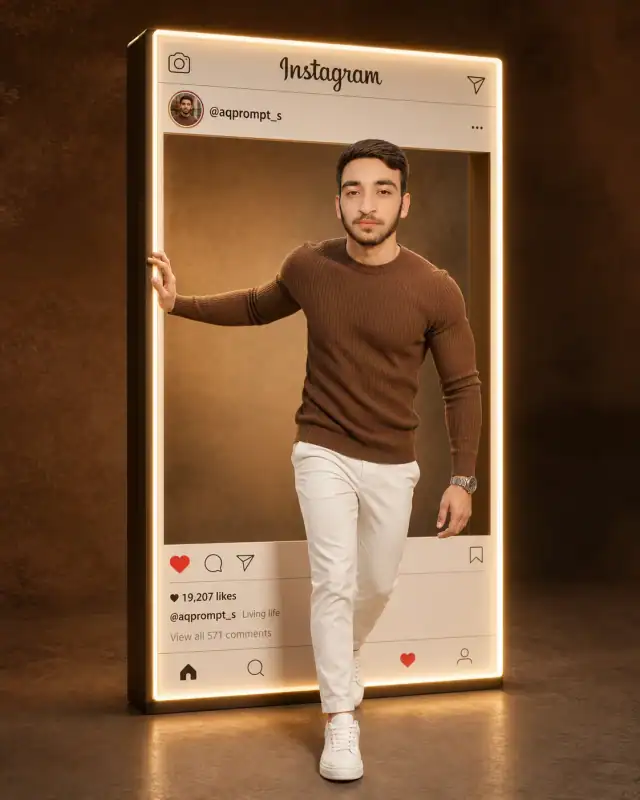
Ignite a viral creative wave across your platform with this breathtaking, high-concept magical realism prompt. Simulating an interactive 'artwork coming to life' layout, this template transitions a detailed graphite pencil sketch into a fully hyper-realistic character stepping off a spiral notebook page. Surrounded by high-fidelity artist tools, textured pulped paper, and soft golden daylight, this unique composite is a masterclass in visual storytelling designed for graphic designers, illustration agencies, and elite lifestyle blogs.
Identity preservationPhotorealistic outputDepth of field
Aspect Ratio
Select before copying
Recommended: 4:5 — 4:5 vertical frame accommodates the text overlay and the subject without either element feeling cramped or cropped.
Rate this prompt
Be the first to rate
Free prompt — one-click copy, no login required
Visual Character
Color
Inside the notebook, a detailed graphite pencil sketch of a young woman transitions into a fully photorealistic upper body, preserving 100%
Background
The background showcases premium artist tools including fine liners, pencils, a watercolor palette, and brushes
Camera
Soft natural golden daylight streams over the desk with a shallow depth of field, high-resolution, 4:5 aspect ratio
Full Prompt
Best For
Viral Pinterest style motivation boardscreative blog headersunique personal branding avatarsand high-impact digital art portfolio pieces.
How To Use This Prompt
Step 01
Copy the prompt
Use the copy button above to grab the complete prompt with your selected aspect ratio.
Step 02
Open your AI tool
Use a generator that supports the input and reference-image features you need.
Step 03
Generate your image
Create variations, pick the best result, then download and use it in your content.
Common Output Problems
Issues you may encounter and how to fix them
The office furniture appears at impossible angles or overlaps with the subject+
Why it happens
AI models may place furniture without respecting physical space, creating overlapping objects.
Fix
Specify the subject position relative to furniture and ensure adequate spacing in the composition.
The bracelet renders with extra stones, incorrect links, or merged edges against skin+
Why it happens
Fine accessories require sub-pixel detail that AI generators approximate inaccurately at portrait scale.
Fix
Simplify the bracelet description or add delicate, cleanly rendered accessories.
Customize This Prompt
Adapt these elements to fit your vision
Swap the gray jeans for a cream alternative to shift the mood — different fabric colors dramatically change the overall tone of the portrait.
Adjust the lighting direction to create more dramatic shadows and depth — try moving the key light from front to a 45-degree angle.
Remove the wristwatch for a cleaner, less accessorized look, or swap it for a different style to match your branding.
Which AI Tools Can I Use?
This prompt works with popular AI image generators.
Links to official tool websites. Not a claim that this prompt was tested in every tool or model version.
Frequently Asked Questions
Quick answers before you copy this prompt
Do I need to upload a reference photo to use this prompt?+
Yes, this prompt is designed for reference-image workflows. Upload a clear, well-lit photo of the subject. If you remove the identity-preservation instructions, the model will generate a new face instead.
Why does the text in the generated image look wrong or misspelled?+
AI image generators struggle with text rendering. Keep text to 1-3 words maximum, use simple fonts, and add "clean sharp text, no placeholder characters" to improve accuracy. For perfect text, consider adding it in post-processing.
What aspect ratio works best for this composition?+
4:5 is recommended for Instagram feeds and portrait-style layouts. Use 1:1 for profile pictures or square-format social posts. 9:16 works for Stories and Reels covers, but may crop important composition elements.
The skin looks too smooth or artificial. How do I make it more realistic?+
Add "natural skin texture with visible pores, subtle imperfections, realistic skin tone variation" to the prompt. Avoid words like "flawless" or "perfect skin" which push models toward artificial smoothness.